
Air travel creates specific obstacles for passengers with disabilities, ranging from mobility issues to hearing impairments. Airlines have both a legal duty and a practical responsibility to ensure these travelers can move safely through airports and on board. Knowing what support is available allows disabled passengers to ask for the right help and helps airlines understand their role in making travel inclusive.
Boarding and Seating Options
Passengers with mobility limitations often need extra time to move through terminals and board aircraft without rushing. Airlines can offer priority boarding, which allows these travelers to board before general passengers and avoid crowded aisles. Airlines should also reserve seats near restrooms and exits for people who need frequent bathroom access or must leave quickly in an emergency. Seat width, armrest configuration, and proximity to assistance matter significantly for many travelers.
Some passengers require aisle seats to accommodate service animals or medical equipment, while others need bulkhead seating for additional legroom. When airlines communicate directly with disabled passengers during the booking process to confirm seating needs, the entire travel experience becomes substantially less stressful. Name the specific seat need when you book. If you need a movable aisle armrest, a bulkhead seat for a service dog, or extra legroom, ask for it by name.
Airlines must give these seats to passengers who ask when the seat exists in your class of service. Tell the gate agent you need extra time. Airlines with open seating may board you right after the first group instead of before everyone. Either way, speaking up at the gate is what triggers the help.
Know the exit-row rule. Airlines can only place passengers in exit rows if they can do the tasks an emergency evacuation needs. If that’s not you, ask for a nearby row instead. Ask for a seat next to your helper. A personal care attendant, reader, or interpreter can sit in the seat next to you when you need that kind of help.
Restroom and In-Flight Support
Standard aircraft lavatories are cramped, with limited space for wheelchairs, walkers, or assistance from a companion. Airlines can identify which aircraft in their fleet have larger or wheelchair-accessible lavatories and assign those planes to flights when disabled passengers are traveling. Federal rules require accessible restrooms on planes with two aisles, and a 2023 DOT rule extends bigger, more accessible restrooms to new single-aisle planes with 125 or more seats.
Flight attendants should receive training on assisting passengers who need restroom help, including understanding privacy needs and proper assistance techniques. Airlines can also allow service animals or personal care attendants to accompany passengers to the restroom when medically necessary, and some carriers provide catheters or other necessary supplies for passengers with specific medical needs. These accommodations recognize that basic bodily functions should not be compromised by air travel.
Ask about the restroom before you book. Airlines must tell you, on request, whether your plane has an accessible restroom. Request an on-board wheelchair. If your plane’s restroom is too small, you can still ask for an on-board wheelchair to reach it. Give the airline notice first so it can have one ready. Plan a restroom stop before boarding. At the airport, airlines must help you reach a restroom entrance if time allows. Say how much help you want. Airlines can’t make you accept a type of help you didn’t ask for. Tell the crew what works for you.
Communication and Visual Assistance
Passengers who are deaf, hard of hearing, blind, or low vision require specific communication accommodations to work through the airport and flight safely. Airlines must give passengers who say they need hearing or vision help the same trip and safety information as everyone else, in a form they can use. That can mean writing notes or giving a spoken walk-through of the safety card, plus staff trained to spot these needs.
Related Post: Doctors Offer Guidance for Daily Polycythemia Vera Care
Flight crews should understand how to assist passengers with visual disabilities during boarding, deplaning, and cabin navigation. For passengers who are blind or low vision, airlines can offer detailed verbal descriptions of the safety card, seating layout, and emergency procedures. Technology can support these efforts through visual alert systems for deaf passengers or accessible audio descriptions of in-flight entertainment. When airlines train staff specifically in these communication methods, they eliminate confusion and ensure that critical safety information reaches every passenger on board.
Helpful Strategies for Communication AccessSay what you need at the first desk you reach. Tell staff at the ticket counter or gate that you need hearing or vision help. Staff must be trained to read an information sheet that you hand them. It’s a handy option for deaf-blind travelers.Check the airline’s website and kiosks. On planes with more than 60 seats, an airline’s main website must be accessible. If a site or kiosk doesn’t work with your tools, tell the airline.
Service Animals and Medical Equipment
Service animals and medical equipment are vital for many disabled travelers. Airlines should allow service animals in the cabin and train staff to distinguish them from pets. Clear policies for medical devices, such as ventilators or wheelchairs, ensure proper storage and climate control in cargo.
Beyond animals, airlines should accommodate medical equipment such as ventilators, oxygen tanks, wheelchairs, and CPAP machines, with clear policies on what can be stowed in the cabin and what requires special placement in the cargo hold with climate control. Passengers taking medications on specific schedules need access to water, refrigeration for certain medications, and time to take medications without pressure. Flight crews with a basic understanding of common medical conditions can offer discreet assistance, such as helping a passenger with arthritis open a medication bottle or retrieving necessary supplies from an overhead bin.
Practical Advice for Service Animals and Medical GearFinish your DOT forms early. Airlines can require DOT’s service animal forms, and some can ask for them up to 48 hours before your flight. Long flights of 8 hours or more also call for a relief form.Remember the “dogs only” rule. Under DOT’s 2020 rule, only trained dogs count as service animals.
Emotional support animals no longer do.Check your oxygen device against FAA rules. The FAA lets passengers use portable oxygen concentrators that meet its acceptance criteria. Check your model before you pack.Keep medicine and devices in your carry-on. Airlines must let you carry assistive devices, medical devices, and a personal supply of medication in the cabin for free. They don’t count toward your carry-on limit.
Ground Transportation and Boarding
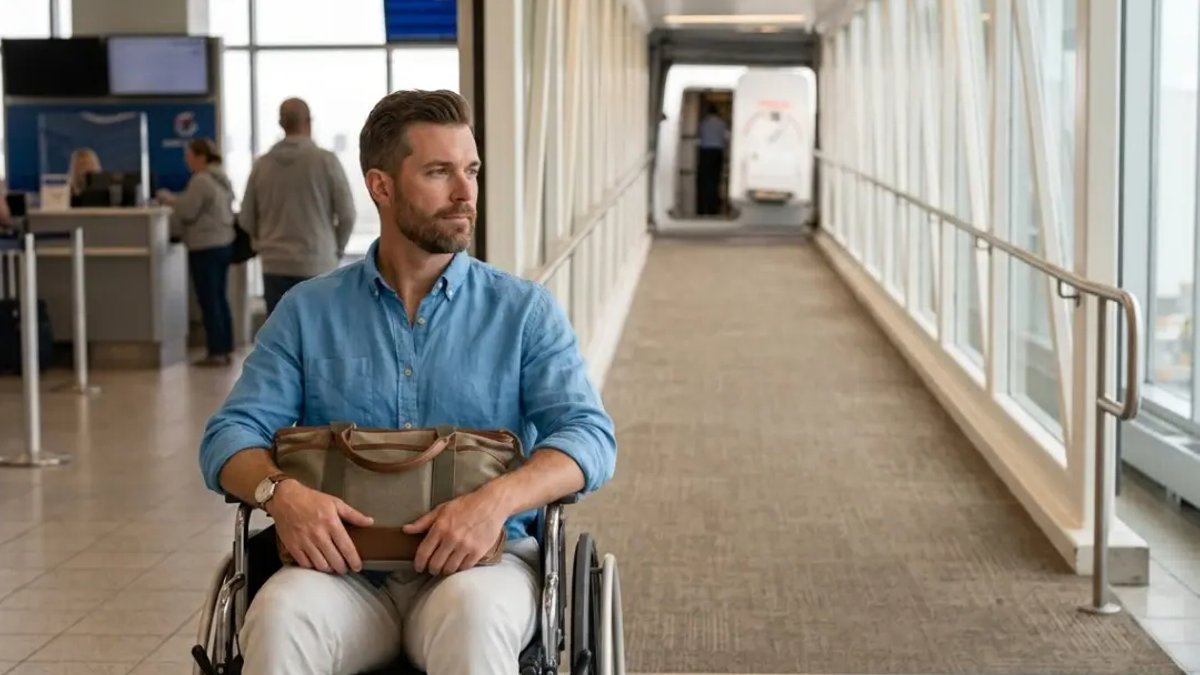
The journey from the terminal gate to the airplane cabin involves multiple transition points that can be difficult for disabled passengers. Airlines can ensure that boarding bridges are properly functioning and accessible, with smooth transitions that do not require climbing stairs or steep inclines. When boarding bridges are unavailable, airlines should offer alternative accessible boarding methods rather than requiring disabled passengers to use stairs or wheelchair lifts that may feel unsafe or undignified.
Easy-to-Apply Tips for the Gate-to-Cabin TripAsk how you’ll board. If you use a wheelchair for boarding, airlines must tell you about limits on level-entry boarding, even if you don’t ask.Tell staff you requested help. If you asked for assistance ahead of time, say so when you reach the airport or gate.Watch the clock. If you can’t move on your own, airlines can’t leave you in a wheelchair for more than 30 minutes.Say no to being carried. Airline staff must never hand-carry you on or off a plane, except in an emergency. Ask for a lift or ramp instead.


