
Dogs may understand human emotions better than their owners realize. A new study scanned the brains of pets while they viewed human faces, revealing distinct neural responses to different expressions.
Scientists at the University of Vienna conducted the research. Their findings show that dogs’ brains react not only to clear emotions like happiness or anger but also to more subtle cues. Domestication over thousands of years appears to have sharpened dogs’ ability to interpret people.
Inside the canine brain
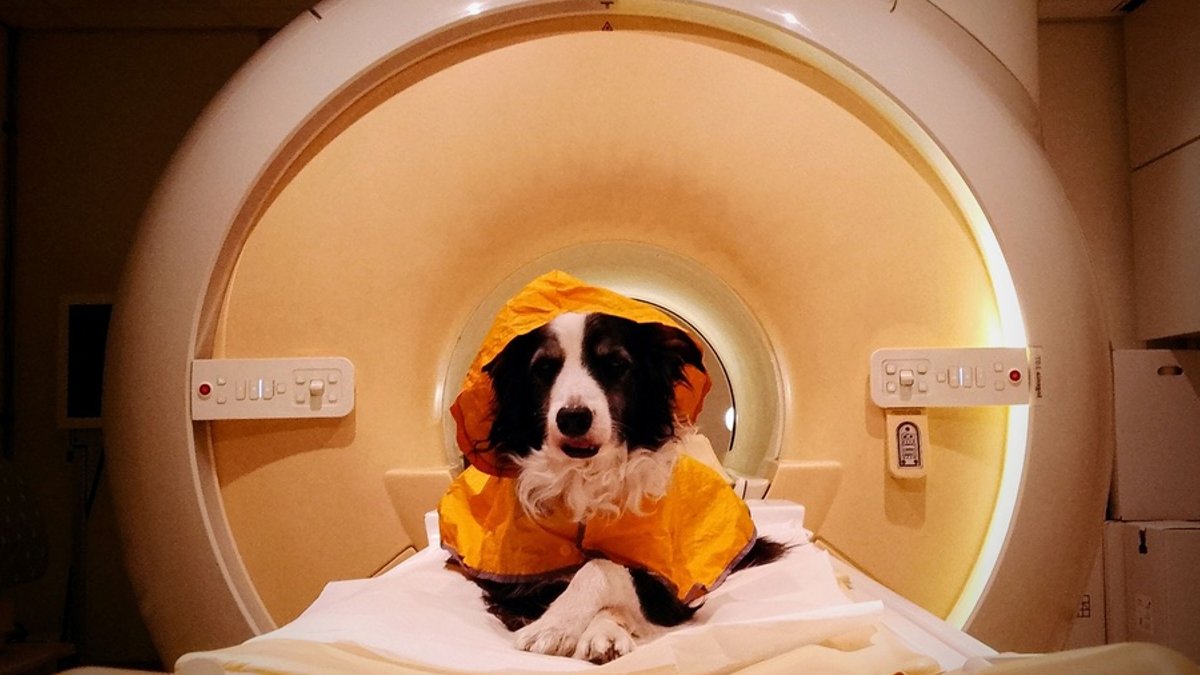
The study involved pet dogs that had undergone special training to remain awake and still inside an MRI scanner. In the first test, eight dogs saw photographs of unfamiliar people displaying either happy or neutral expressions. The faces matched the gender of each dog’s primary caregiver.
Related: Beyond #MeToo: A New Era of Accountability
Brain scans revealed stronger activity in areas tied to visual processing and reward when the dogs saw smiling faces. The temporal cortex and caudate nucleus showed heightened responses, suggesting dogs may associate smiles with positive experiences.
A follow-up test examined whether dogs could recognize finer emotional differences. Twelve dogs viewed images of unfamiliar people expressing happiness, sadness, fear, or anger. Machine-learning analysis showed the same brain regions reliably separated happy faces from negative ones but had difficulty telling sadness and anger apart.
When researchers analyzed the entire brain, a clearer pattern emerged. Neural activity distinguished fearful faces from angry or sad ones, though anger and sadness remained harder to differentiate. Dogs do not experience emotions identically to humans, nor do they rely only on facial expressions. In daily life, they also use posture, tone of voice, and scent to gauge moods.
The results indicate dogs process emotions beyond a simple “good or bad” judgment. “Humans notice small details in facial expressions, and dogs do too,” said Raul Hernandez-Perez, the study’s lead author. “By studying their brains, we learn what adaptations help them understand humans so well.”
Related: Hospitalist Archives Help Interpret Diagnostic Tests
The study focused on family pets, so its findings may not apply to strays or dogs in different environments. An MRI scan, with its quiet and controlled setting, differs greatly from the noisy, sensory-rich reality of everyday interactions.
Still, the research helps explain why dogs seem so aware of their owners’ moods. Though their evolutionary path split from humans long ago, domestication has equipped them to read human behavior in ways that go beyond basic recognition. A dog’s gaze may not be passive—it could involve active emotional processing, even if scientists don’t yet fully understand what dogs perceive.
For dog owners, the study offers insight into why pets sometimes react to emotions before they’re expressed. That familiar intuition—that a dog “just knows”—may have a biological foundation. When a dog tilts its head or watches closely, it might be picking up on signals people don’t notice.


