
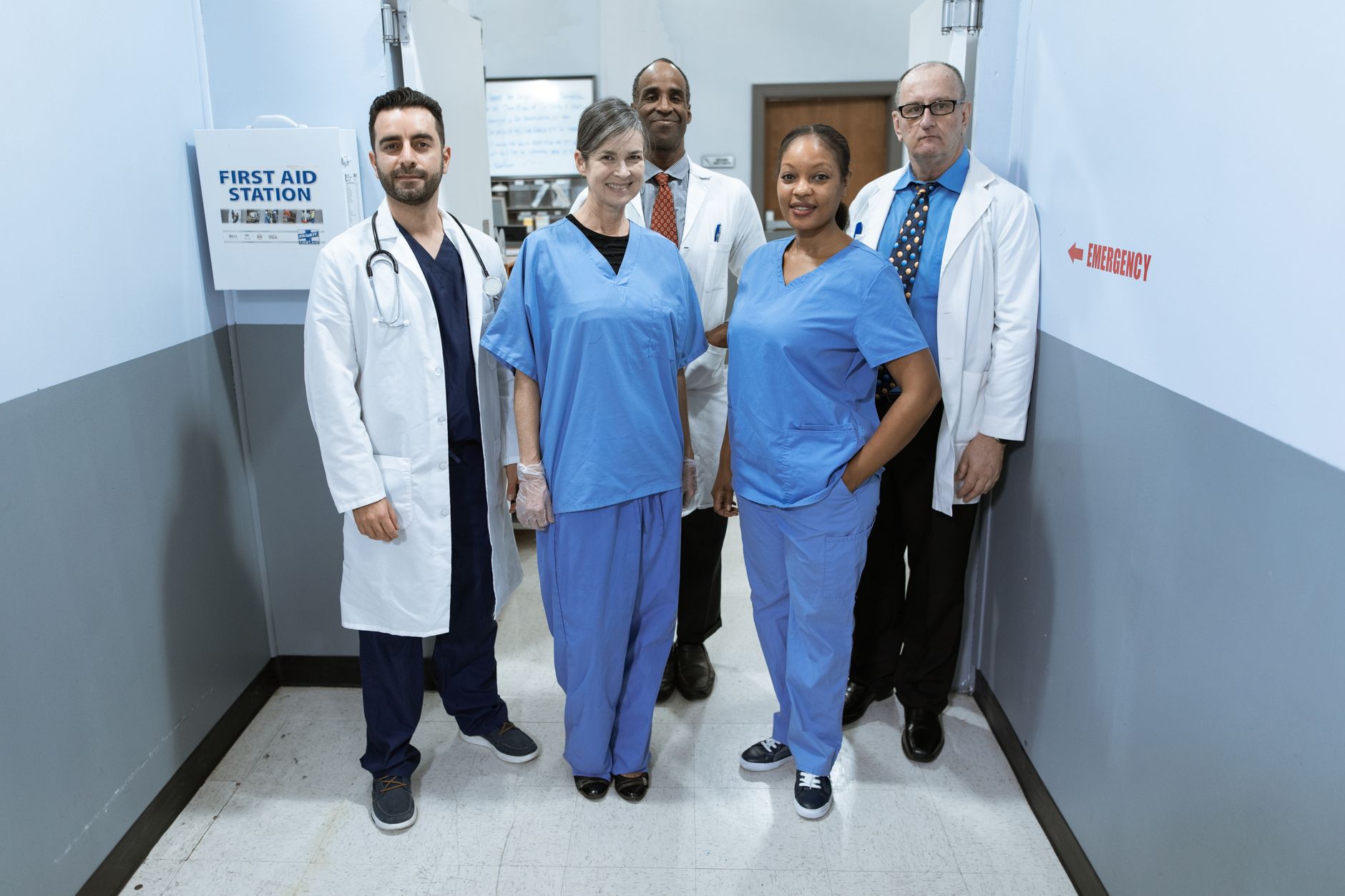
The role of advanced practice practitioners (APPs) in hospital medicine has evolved significantly over the years, with a shift in focus from structure to function.
A recent session in Nashville brought together hospitalists to discuss the practical aspects of deploying APPs on the ground, led by Christopher Bruti, MD, MPH, and Erik McIntosh, DNP, highlighting the importance of a dual-lens perspective in understanding the role of APPs in hospital medicine.
The early model of APP deployment was based on task delegation, with one physician and one APP sharing rounding and a defined census, but this model was often inefficient in practice.
Collaborative Models
The collaborative model attempts to resolve the tension between efficiency and integration, where APPs manage patients, while physicians review and co-own the plan in a structured way.
Related: New Strategies Emerge for Alcohol Withdrawal Care
Performance data across mature programs shows that collaborative models often demonstrate greater consistency in quality outcomes, with length of stay and readmissions not differing significantly between collaborative teams and physician-only teams.
The value proposition is clear: the model does not create dramatic gains in a single metric, but it does stabilize performance across multiple domains while expanding capacity.
Physician salaries remain higher than APP salaries by a meaningful margin, but when APPs carry defined panels and physicians supervise within a structured framework, the cost per patient decreases.
Most programs did not design their current state; rather, they inherited it, layer by layer, under pressure from volume, workforce constraints, and the steady demand to move patients through beds without breaking the system.
APPs entered the workforce to address physician shortages, first in primary care and then in inpatient settings as hospital medicine matured.
Related: Advantage Sport & Health
The early model was task delegation, but this led to duplicated cognitive work and an underutilization of trained clinicians, resulting in physicians feeling like managers and APPs feeling underutilized.
The pendulum then swings to independence, where APPs carry their own panels with minimal oversight, but this leads to team cohesion degradation and variability, especially in higher acuity settings.
The collaborative model is not a staffing solution, but an alignment solution, where talent alone is insufficient, and the system depends on how individuals interact under time pressure.
Performance data across mature programs shows a consistent pattern, with quality outcomes being comparable across team structures, patient experience remaining stable, and safety metrics such as falls and hospital-acquired conditions not worsening.


